2026/07/16

Factory Automation Examples: Why Choosing the Right Electric Actuator Matters

Novità e Stampa

Factory automation relies on repeatable, controlled, and reliable motion. From lifting and positioning to transferring and adjusting materials, many automation systems depend on electric actuators to perform essential movement within machines and production equipment.


Choosing the right electric actuator is not only a mechanical decision; it directly affects system stability, productivity, maintenance needs, and long-term equipment performance. For manufacturers planning automation projects, understanding common factory automation examples can help clarify where electric actuators are used and why proper actuator selection matters.


Common Motion-Control Applications in Factory Automation

When companies explore factory automation, they often start by reviewing the overall flow of factory operations: production line processes, material handling, and packaging. Each stage may involve repetitive movement, manual handling, or positioning tasks that can be improved through automation.


In these factory automation examples, electric actuators and lifting columns can support controlled motion for height adjustment, lifting, positioning, transfer, and equipment adjustment. Instead of focusing only on individual machines, it is helpful to understand how motion solutions can support the flow of materials and tasks across the factory.


Common factory automation applications include:

Factory Process

Automation Example

TiMOTION Motion Role

Production Line

Robotic arms or humanoid robots assist with picking, assembly, or material processing

Height adjustment and equipment positioning

Material Handling

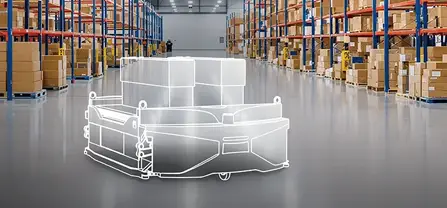
AGV/AMR equipment or forklifts move materials between warehouses, production lines, packaging areas, and storage areas

Lifting, docking, transfer, and load positioning

Packaging

Robotic arms pick finished products, place them into cartons, stack cartons, or support wrapping processes

Height adjustment and stable handling support

Adjustable Workstations

Workstations are adjusted for inspection, assembly, or operator-assisted processes

Ergonomic height adjustment and flexible setup

Conveyor and Transfer Systems

Products or materials are transferred between different production stages

Pushing, positioning, diverting, and equipment adjustment


For example, material handling processes often rely on controlled lifting, docking, transfer, and positioning movements to move goods between warehouses, production lines, packaging areas, and storage areas. In production and packaging processes, lifting columns and electric actuators can also work with robotic arms, humanoid robots, AGV/AMR equipment, or conveyor systems to support height adjustment, load handling, and stable material flow.


Further reading:


The Role of Electric Actuators in Pushing, Pulling, Lifting, Positioning, Transferring, and Adjusting

Electric actuators and lifting columns provide controlled linear motion for many factory automation processes. They can support essential movement tasks such as lifting, pushing, positioning, docking, transfer, height adjustment, and equipment alignment.


In production lines, material handling systems, packaging equipment, and conveyor systems, these motion components often work with robotic arms, AGV/AMR equipment, forklifts, or other automated machinery. By helping equipment move materials, adjust working height, align components, or stabilize transfer processes, electric actuators contribute to smoother automation workflows.


A well-selected actuator helps automation equipment perform these motion tasks with stable movement, suitable durability, and reliable control performance. When the actuator is matched to the application, it can support long-term operation and reduce unnecessary maintenance.


Factory Automation Examples: Why Choosing the Right Electric Actuator Matters-02


What Can Go Wrong When the Wrong Actuator Is Selected?

Selecting the wrong actuator can affect more than a single motion component. In factory automation, each production stage is connected, so unstable motion or poor system integration may interrupt material flow, reduce efficiency, or increase downtime.


Common issues include insufficient force, unstable positioning, unsuitable duty cycles, or limited compatibility with the machine control system. For example, if an actuator cannot provide reliable feedback or coordinated motion, robotic arms, AGV/AMR equipment, conveyors, or other automated systems may not operate as intended.


Environmental mismatch can also affect long-term reliability. Dust, moisture, temperature changes, and continuous operation may shorten equipment life if the actuator is not properly designed for the working environment.


In factory automation, actuator selection is not only about moving a load. It is about ensuring stable motion, reliable communication, coordinated operation, and long-term system performance.


How to Choose the Right Electric Actuator for Factory Automation

Choosing the right electric actuator for factory automation starts with understanding the process, motion task, and system requirements. In addition to mechanical specifications, the actuator should also match the equipment’s control architecture, communication needs, and operating environment.


Key selection factors include:


Selection Factor

Why It Matters

Load

Determines the required force and mechanical strength

Speed

Affects cycle time, productivity, and motion stability

Stroke 

Defines the required travel distance

Duty Cycle

Indicates how frequently the actuator must operate

IP Rating

Helps protect against dust, water, and harsh environments

Feedback Sensors

Support position monitoring and repeatable movement

Control System Integration

Ensures compatibility with the machine’s control architecture

Communication Protocol

Supports data exchange between the actuator system and the machine controller

Diagnostics and Status Feedback

Help detect errors, monitor system status, and reduce unexpected downtime

Synchronization

Supports coordinated motion when multiple actuators or mechanisms need to move together 

Parameter Configuration

Allows motion settings to be adjusted based on equipment requirements 

Mounting Space

Affects whether the actuator can be properly installed within the equipment

Operating Environment

Helps determine the need for protection against temperature, dust, moisture, or outdoor conditions


In advanced automation systems, factors such as communication, diagnostics, synchronization, and parameter configuration can be just as important as mechanical performance. These capabilities help the system monitor movement, detect errors, coordinate equipment modules, and maintain reliable operation over time.


The right electric actuator must match the full application environment, including motion requirements, control method, communication needs, installation limitations, and protection requirements.


* To explore available actuator options, visit TiMOTION’s electric linear actuator product range.


Building Reliable Factory Automation Systems with TiMOTION Industrial Motion

Reliable factory automation requires electric actuation solutions that can integrate with equipment structures, control systems, and long-term operating conditions.


TiMOTION Industrial Motion provides electric linear actuators, lifting columns, control boxes, controls, power supplies, and accessories for a wide range of industrial automation applications, including production lines, material handling systems, AGV/AMR equipment, conveyor systems, packaging equipment, agricultural machinery, and other demanding environments.


Depending on the application, TiMOTION solutions can support controlled motion, feedback, diagnostics, synchronization, parameter configuration, and system integration. For automation systems that require smarter motion control and easier integration, TiMOTION’s T-Smart actuators provide built-in intelligence and an integrated driver board, helping simplify wiring and reduce the need for external control boxes. T-Smart actuators can communicate with existing systems through standard protocols such as SAE J1939, Modbus RTU, CANopen, and LIN bus. For applications that require coordinated motion, T-Smart Advanced Protocol also supports synchronization of up to 8 actuators. These capabilities help support more efficient integration, monitoring, and control in automated equipment.


Combined with customization services and vertically integrated manufacturing capabilities, TiMOTION helps machine builders develop motion solutions that fit their equipment design, performance goals, and operating conditions.


Whether you are designing a new automation system or upgrading existing equipment, TiMOTION Industrial Motion can help you build reliable and efficient factory automation solutions.


Learn more about TiMOTION’s T-Smart actuators, or contact us to discuss your factory automation requirements.


FAQs About Electric Actuators in Factory Automation

Q1: What are common factory automation examples?

Factory automation can be applied across different production stages, including production lines, material handling, packaging, and quality inspection. Depending on the application, automation systems may integrate robotic arms, AGV/AMR equipment, conveyor systems, lifting platforms, and electric actuation solutions to improve productivity, consistency, and operational efficiency.


Q2: Why are electric actuators important in factory automation?

Electric actuators provide controlled linear motion for lifting, positioning, pushing, pulling, transferring, and equipment adjustment. They are commonly integrated with robotic arms, AGV/AMR equipment, conveyor systems, lifting platforms, and other automation equipment to support stable motion, reliable positioning, and efficient material handling.


Q3: What should be considered when selecting an electric actuator?

Important considerations include load, speed, stroke, duty cycle, IP rating, feedback sensors, communication requirements, synchronization, installation space, and operating environment. Evaluating these factors together helps ensure reliable motion performance and system integration in factory automation.


Q4: Can electric actuators work with robotic arms, AGV, and AMR systems?

Yes. Electric actuators are commonly integrated into robot-assisted production lines, AGV/AMR equipment, lifting platforms, conveyor systems, and other automation equipment. Depending on the application, they can support lifting, positioning, load transfer, and synchronized motion.


Q5: How can TiMOTION support factory automation projects?

TiMOTION provides complete electric actuation solutions, including electric linear actuators, lifting columns, control boxes, controls, power supplies, and accessories. We also support customization, communication integration, synchronized motion, and system-level solutions for a wide range of factory automation applications.

Hai una domanda?
Siamo a tua disposizione.

mail icon Contattaci

Applicazioni Correlate

Electric Actuator Solutions for Automatic Guided Vehicle (AGV) and Autonomous Mobile Robot (AMR)

AGV e AMR

This mobile site is designed for compatibility with iOS 8.0+ or Android 5.0+ devices.